How I Designed Merchandise For 15 D&D Classes
How one tiny idea somehow became well over a thousand products.
A few years ago, I started playing Dungeons & Dragons.
Like most people who discover a new hobby, I immediately develop a completely normal level of enthusiasm about it and went looking for merchandise. Surely there had to be some interesting T-shirts, mugs, or something else that would let me quietly signal to the world that I spent my evenings pretending to be a fantasy character with deeply questionable decision-making skills.
There was certainly no shortage of D&D merchandise online. The problem was that much of it felt remarkably similar. Lots of dragons. Lots of swords. Lots of dark colours. Lots of jokes about nat twenties. Some of it was very good. None of it was quite what I was looking for.
What I wanted was something colourful. Something that celebrated the individual classes. Something that felt like it had been designed by somebody who loved the game rather than somebody who had typed "D&D shirt ideas" into a search bar and picked the first result.
At this point, a sensible person would have accepted that the perfect item probably didn't exist and moved on with their life. Instead, I decided to create it myself.
This seemed like a reasonable idea right up until it became a three-month project involving fifteen class collections, an entire website build, several emotional breakdowns, and an unexpectedly deep education in the art of repeating patterns.
Curious what the finished collection looks like?
Browse the D&D Collection →The Original Plan
The original plan was simple enough. I wanted to create merchandise inspired by fifteen of the most popular D&D classes. Each class would have its own visual identity, built around a shield-shaped badge that captured the essence of what made that class distinctive. Once I had the badge, I could expand it into repeating patterns and eventually a full collection of products.
In theory, it was straightforward.
In practice, I discovered that trying to distil an entire character archetype into a handful of symbols is a bit like trying to explain the plot of a fantasy novel to somebody who has already decided they aren't interested. You know how it makes sense. You're just struggling to prove it.
Why The Barbarian Was So Difficult
Naturally, I started with the Barbarian.
Naturally, I assumed it would be one of the easiest.
The thing about assumptions is that they have a habit of becoming educational.
If somebody asked me to describe a Barbarian, I could do it quite easily. They like weapons. They enjoy ale. They solve most of their problems by applying force until the problem stops being a problem. They possess a level of confidence that can only really be achieved by wearing very little clothing and carrying an axe the size of a small canoe.
Translating that into a design, however, turned out to be much harder than expected.
A good badge can't include everything. It needs to communicate an idea quickly. Every symbol has to earn its place. The challenge wasn't coming up with things associated with Barbarians. The challenge was deciding which parts of the class best represented the whole.
It was my first indication that designing the collection was going to involve a lot more thinking than drawing.
"Apparently, 'I'll just design one class' is how the trouble starts."
Learning Repeating Pattern Design
One of the biggest surprises was discovering just how difficult repeating patterns can be.
At the start of the project, I assumed the hard part would be creating the artwork itself. Once I had the illustrations finished, surely arranging them into a pattern would be relatively simple.
This was not correct.
A repeating pattern has its own strange internal logic. Too much space and it feels empty. Too little and it feels cluttered. Certain shapes create visual weight. Certain combinations draw the eye in ways you don't expect. You spend an alarming amount of time nudging things a few pixels in one direction before immediately moving them back again.
Looking back, I think I would have saved myself a considerable amount of frustration if I'd spent more time learning pattern design before starting the collection. Then again, learning things the difficult way does seem to be one of my more … consistent … character traits.
The Classes That Behaved And The Ones That Didn't
Not every class fought me equally.
The Alchemist was probably the easiest. Some designs feel as though you're dragging them uphill. The Alchemist was one of those classes where I sat down expecting a fight and it just got on with it.
The class comes with an enormous collection of visual elements. Potions, ingredients, beakers, tools, mortar and pestles, cauldrons. Every time I thought I'd exhausted the possibilities, another idea appeared. The whole thing flowed together so naturally.
The Druid was... less cooperative.
Some projects practically design themselves.
Others make you question your career choices.
The Druid was firmly in the second category.
There was nothing particularly unusual about the design brief. I knew the sort of imagery I wanted to use. Nature. Growth. Transformation. The usual Druidic suspects.
The problem was that absolutely nothing looked right.
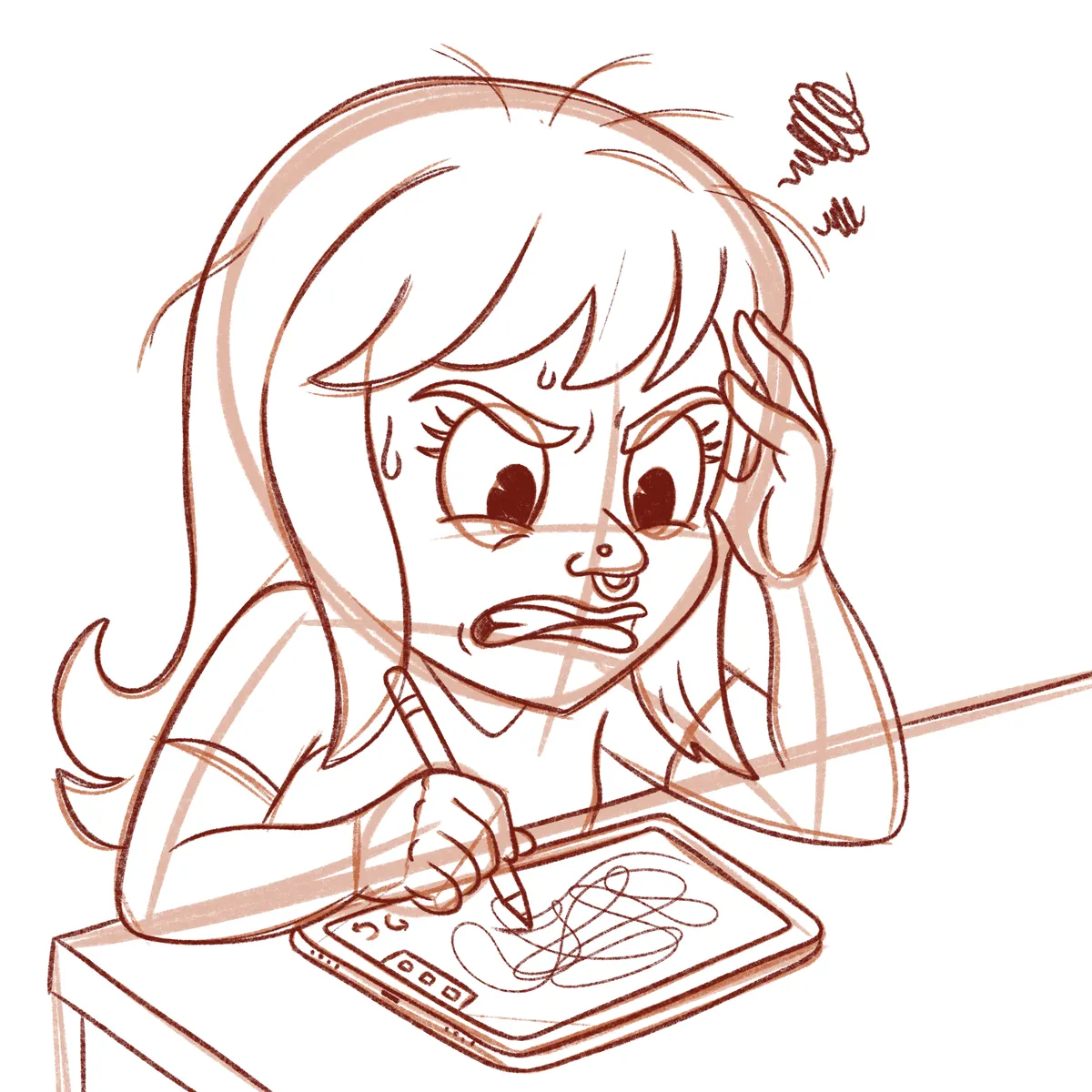
I'd arrange the elements and hate it. Rearrange them and hate it differently. Ask for advice and dislike those suggestions as well. Eventually I reached the point where I was becoming irrationally angry at a collection of oak leaves and moon cycles.
The only solution was to walk away.
It's one of the most frustrating aspects of creative work. Sometimes effort helps. Sometimes persistence helps. And sometimes your brain decides it would rather start a fight with a drawing than cooperate.
When I came back later, the solution appeared surprisingly quickly. To this day I couldn't explain exactly what changed.
Perhaps the Druid simply sensed it was winning.
Why Understanding D&D Mattered
One thing that became increasingly obvious throughout the project was that understanding D&D mattered just as much as understanding design.
Fortunately, I had some very knowledgeable friends who were happy to answer questions and correct my assumptions.
The Ranger was probably the best example of this. Before starting the collection, I had a fairly simplistic understanding of the class. In my head, Rangers were archers. That's the category. Job done.
Then somebody far more well-informed than me pointed out that Rangers are much closer to the Aragorn style of wilderness tracker and survivalist than the version I had imagined.
It seems obvious now.
At the time, it completely changed how I approached the design.
Good design often starts long before you open your drawing software. It starts with understanding what you're trying to communicate. The artwork is only the final stage of that process.
The Website Crashed. Twice.
Of course, while all of this was happening, I had also decided to build an entire website from scratch.
In hindsight, this may have been ambitious.
The collection itself was already a substantial project. The website was effectively a second full-time learning experience running alongside it. Every day seemed to involve researching something new, troubleshooting something broken, or discovering a fresh and exciting problem that hadn't existed the day before.
The low point came when plugin conflicts crashed the website.
Twice.
Not a small error. Not a missing image. Not a button that refused to behave itself.
The entire project.
Gone.
Both times I had to start over.
It's difficult to explain just how demoralising that feels when you've already invested weeks of work into something. You know exactly how much effort it will take to rebuild because you've already done it once. The second time? I came very close to abandoning the whole thing.
I also cried.
Quite a lot, if we're being honest.
The strange thing about large projects is that they rarely fail because of one catastrophic obstacle. They fail because people eventually run out of energy. Looking back, I'm fairly sure stubbornness carried me through several stages of this project where motivation had packed its bags and left.

After careful review, management has concluded that building an entire merchandise collection and a website simultaneously was, in hindsight, an avoidable decision.
No further action will be taken, because it appears to have worked.
The Moment It Became Real
Eventually, after three months of designing, redesigning, researching, learning, troubleshooting and repeatedly questioning my life choices, I reached the final class.
The Dungeon Master.
Oddly enough, that ended up becoming one of my favourite badges.
I'd learned a lot by that point, and I found myself simplifying the design rather than adding more to it. It felt cleaner. More confident. Less concerned with proving itself.
When I finished it, I realised I wasn't looking at another piece of artwork. I was looking at the end of my collection. For the first time, I could see all fifteen classes together. Not as individual designs, but as a complete body of work.
That was the moment it felt very real. Just a quiet moment staring at a shield-shaped badge and realising there were no more classes left to design.
What The Project Taught Me
When people ask what I learned from the project, they usually expect the answer to be something about illustration or design. And to be fair, I did learn a lot about both. What stuck with me most, though, was something else.
I've always had a tendency to hesitate before starting large projects. Partly because I'm worried I won't be able to do them. Partly because I'm worried I will manage to do them and then won't know what to do next. And partly because there is a small, awkward part of my brain that occasionally asks what happens if I put all this effort into something and the ending turns out to be surprisingly ordinary, or comes to absolutely nothing.
The collection didn't solve any of those fears but it did give me evidence that I could figure things out as I went. That I could survive mistakes and rebuild something from scratch even if it is unpleasant.
Most importantly, evidence that finishing a large project isn't a magical quality possessed by other people. It's usually just the result of continuing long after the exciting part has worn off.
I started this project because I couldn't find the kind of D&D merchandise I wanted to buy.
Three months later, I had fifteen class collections, a functioning website, a much better understanding of design, and several new grey hairs. Not a bad trade, all things considered.
Sometimes the thing you're making isn't really the thing you're building at all. Sometimes you're building skills. Sometimes you're building confidence. Sometimes you're building proof that you're capable of more than you thought.
And sometimes you're just looking for a T-shirt, failing to find one you like, and accidentally creating an entire business instead.
Explore The Collection
If you'd like to see how all fifteen classes turned out, you can browse the full D&D Collection.
You can also find more posts in my Creative Process Archive, where I write about illustration, design, and the occasional creative disaster.

P.S.
A little note before you go
Made it all the way down here? You might enjoy the newsletter too. I send occasional updates about new artwork, books, works in progress and whichever creative rabbit hole I have wandered into this time.
No spam. Just the occasional letter from the drawing desk.