The Great Dragon Merchandise Monopoly
D&D Merchandise
I like dragons. Dragons are wonderful. I like them almost as much as I like dungeons. They're responsible for some of the most memorable moments I've had playing Dungeons & Dragons, and I have absolutely no objection to seeing one every now and again. I do, however, have a growing suspicion that they've quietly negotiated exclusive merchandising rights over the entire hobby.
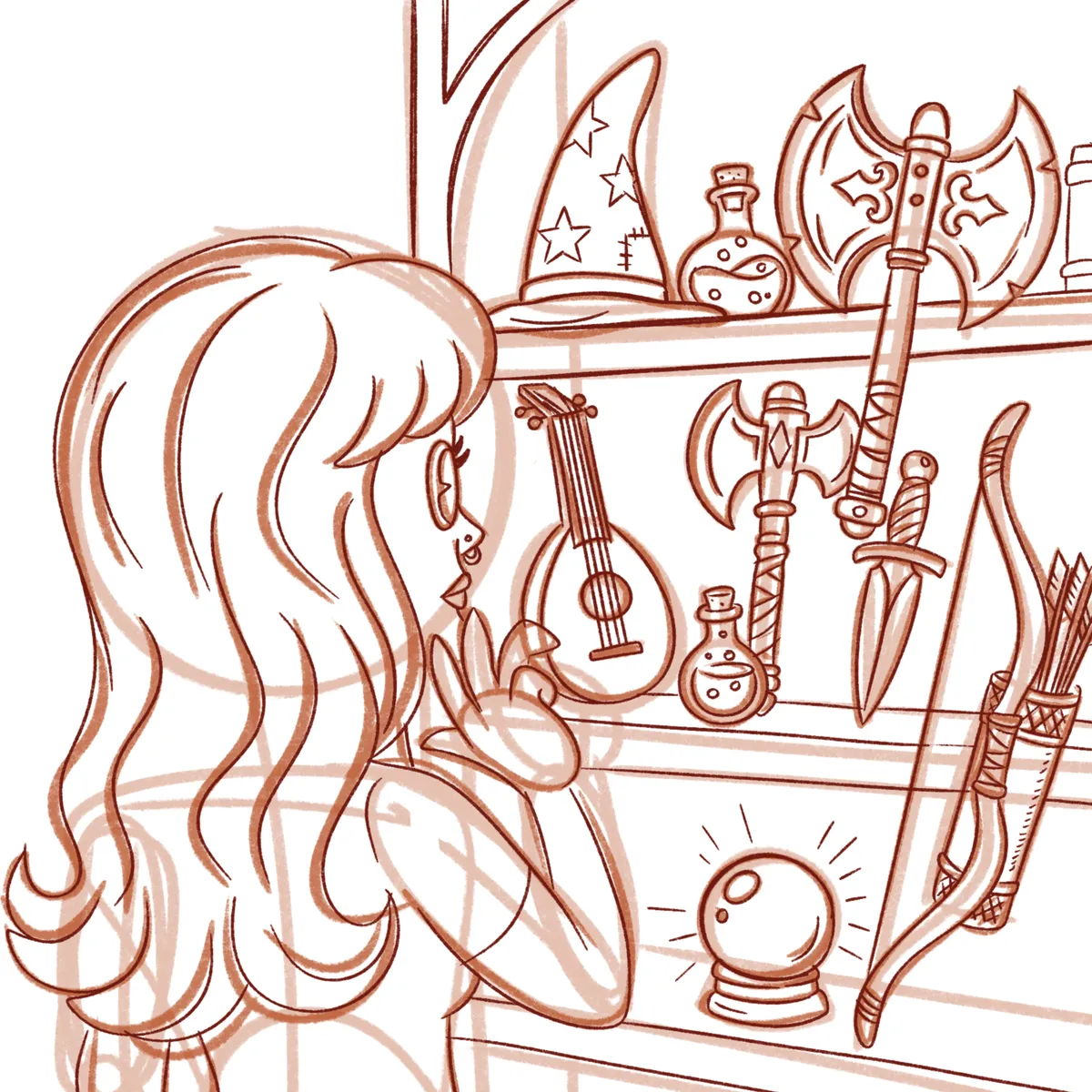 Fifteen classes. Fifteen different ways of seeing the same game.
Not because I desperately needed another T-shirt, hoodie or jumper, but because every new hobby seems to trigger the same little instinct. You want something you can wear that tells the world, "This is my thing now."
There certainly wasn't a shortage of D&D merchandise. If anything, there was almost too much of it. Page after page of graphic T-shirts, fantasy hoodies, dragons, swords, dice, distressed fonts and jokes about natural twenties. Whether it was clothing, mugs or accessories, it all started to blur together until it felt less like a collection of ideas and more like variations on the same one.
The Difference Between D&D Merchandise And Character Merchandise
That might sound like splitting hairs, but I don't think it is. We often talk about people "playing D&D", but that's rarely how we talk about ourselves once we've been in the hobby for a while. Ask someone if they play and you'll get a fairly short answer. Ask them what they're playing, on the other hand, and you've accidentally committed yourself to the next twenty minutes.
People don't usually tell you they're into fifth edition. They tell you about the Wizard who's survived three campaigns against all statistical probability. Or the Bard who somehow talks the party out of every fight before immediately causing another one. Or the forever Dungeon Master who insists they really are going to get a chance to play next campaign.
The game is what brings us to the table. The characters are what keep us talking about it years later.
I was chatting to my own Dungeon Master about this while we were discussing character creation, and he made an observation that has stayed with me ever since. New players often create characters that aren't all that different from themselves. It makes perfect sense. You're learning a new system, trying to remember what your spells do and hoping you haven't misunderstood the rules so badly that you've accidentally committed a war crime with Mage Hand. Playing someone who thinks a bit like you is one less thing to worry about.
For legal reasons: I have no evidence that Mage Hand can technically be used for war crimes. Give my party another six months and I'll let you know.
Then, somewhere along the line, confidence quietly creeps in.
The shy player decides to become a Bard. The organised planner discovers that charging directly at a dragon as a Barbarian is surprisingly therapeutic. Characters stop being idealised versions of ourselves and start becoming people in their own right, with flaws, quirks and terrible judgement.
Why Classes Matter So Much
And yet something else tends to stay remarkably consistent.
People keep coming back to the same class.
Not everyone, of course. There are players who bounce happily between everything on the character sheet. But every group I've ever played with seems to have someone who will eventually admit, usually with a slight shrug, "I just play Wizards." Or Rogues. Or Clerics. Or Rangers. As though, after enough campaigns, they've found the particular corner of the hobby that feels like home.
Whether that says anything meaningful about us is probably impossible to prove, and I'm not sure I'd want to. It's much more interesting as a conversation than a conclusion. What matters is that classes stop being a mechanical choice and become part of how we experience the game. They're the lens through which we solve problems, tell stories and create memories with our friends.
The quiet little realisation: most D&D merchandise wasn't badly designed. It simply wasn't celebrating the same thing I was.
Most of it celebrated Dungeons & Dragons as a whole. Dragons, dice, swords, magic and fantasy. All perfectly good things. But the part of the hobby I'd fallen in love with wasn't fantasy in general. It was the strange little identity that grows around playing a particular class for long enough that it starts to feel like an old friend.
Designing D&D Class Merchandise
That's why I ended up designing fifteen collections instead of one. If you're interested in how the illustrations themselves came together, I've written more about that process in How I Designed Merchandise for 15 D&D Classes.
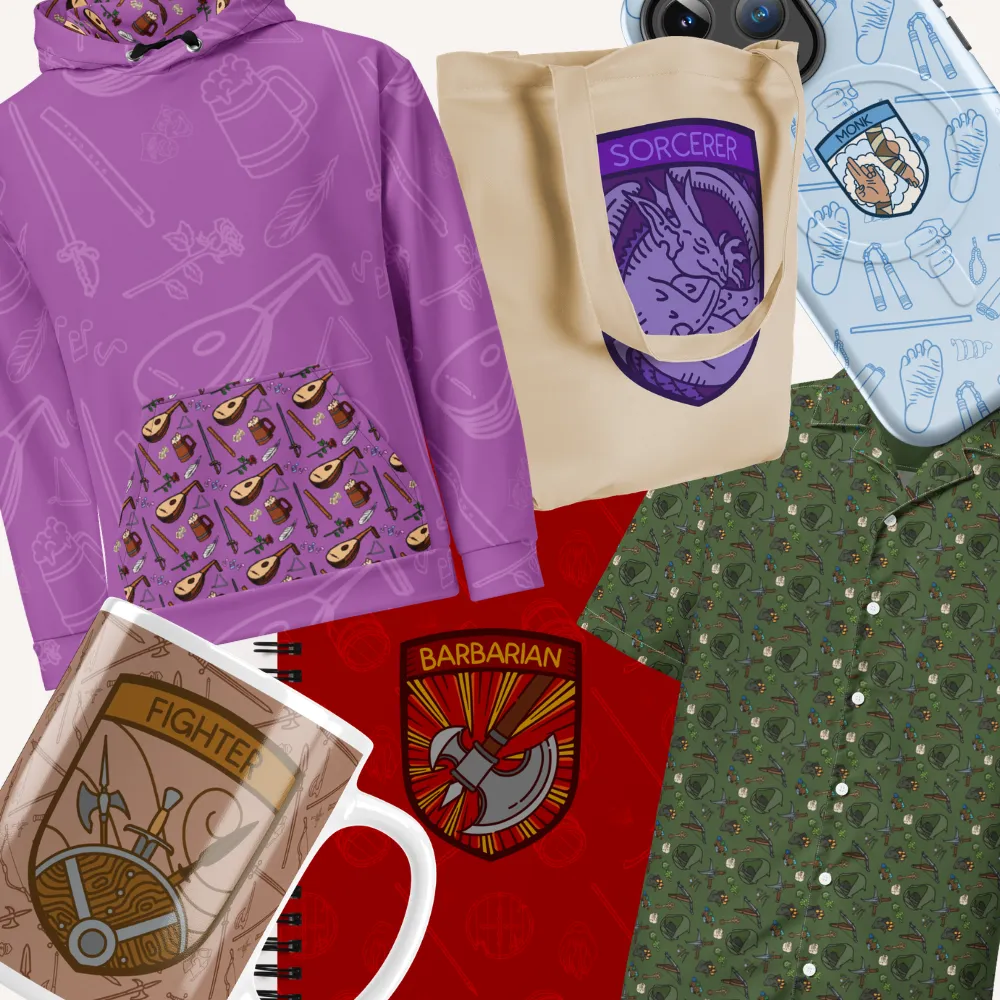 The final collection eventually grew into more than a hundred products, but it all started with one question: "Would a Wizard actually wear this?".
Not Just Generic Fantasy Clothing
Not because fifteen sounded like a sensible business decision. Quite the opposite, in fact. If I'd been approaching it as a business plan, I'd probably have started with the obvious favourites and called it a day.
Instead, I found myself wondering what a Ranger player would actually choose to wear. Not what looked vaguely fantasy, but what would make another Ranger smile if they spotted it on a T-shirt, hoodie or even a mug across the room.
Or a Monk. Or an Artificer. Or the Dungeon Master who's spent years making sure everyone else gets to be the hero.
The more I designed, the more I noticed another pattern. Not everyone wants to wear their hobbies in the same way and I would find myself asking "Would a Wizard actually wear this?"
D&D Gifts Are Easier When You Know The Class
I also realised it was much easier to buy gifts this way. Buying something for "someone who likes D&D" is surprisingly difficult. Buying something for "the friend who's played nothing but Clerics for the last four years" suddenly becomes much easier.
You're no longer buying for the hobby. You're buying for the person.
Some people want artwork that proudly announces exactly what they're into. Others would much rather wear something that simply makes another player smile in recognition. I saw that sentiment repeated again and again while reading discussions online. People weren't necessarily asking for bigger logos or louder references. Quite often they were asking for the opposite. They wanted clothing that felt considered. Something they could wear to work without feeling as though they'd accidentally turned up in costume, but that another player might immediately recognise.
That observation ended up shaping the collection almost as much as the classes themselves. It's why every class has both bold, colourful designs and much more understated ones. They aren't there because one approach is better than the other. They're there because the people wearing them aren't all looking for the same thing.
Every class already has its own identity at the table. It seemed odd to me that so little merchandise treated them that way.
Gainful Bhaji - apparently having thoughts about hoodies again
Looking back, I don't think I spent months designing D&D merchandise.
Because that's the thing I was looking for when I first started searching, and, judging by the conversations I've had with other players since, I don't think I was the only one.
Maybe that's why so much D&D merchandise has always felt a little anonymous to me. It celebrates the game, when most of us quietly celebrate the character who made us fall in love with it in the first place.
The dragons can keep the generic T-shirts.
I think the Bard deserves a hoodie.
Find Your Class
If you've spent this entire article mentally saying, "Yes, but what about my class?", then you're probably exactly who I designed these collections for.
P.S.
A little note before you go
Made it all the way down here? You might enjoy the newsletter too. I send occasional updates about new artwork, books, works in progress and whichever creative rabbit hole I have wandered into this time.
No spam. Just the occasional letter from the drawing desk.